ARPwave Resources
Prolonged Sitting Is Rewiring More Than You Think: Neuromuscular Effects and Health Risks of Sedentary Time


The health risks of prolonged sitting are well documented. Extended sedentary time has been associated with increased risk of cardiovascular disease, obesity, type 2 diabetes, musculoskeletal discomfort, and impaired circulation, with broader effects on joint health and long-term well-being [1][2]. More recent research suggests that prolonged sitting can impact even young, physically active individuals, reinforcing the idea that regular exercise alone may not fully offset sustained sedentary time [3]. These findings align with large-scale observational research and public health reporting that consistently identify prolonged sitting as a contributing factor in long-term health risk.
We have all heard that sitting too much is unhealthy. Yet the discussion often focuses on cardiovascular or metabolic risk. What receives far less attention is how hours of daily sitting influence the nervous system, shape long-term movement patterns, and contribute to pain and movement dysfunction.
For many people, sitting occupies the majority of the workday, often for years at a time. The issue is not simply that we sit. It is how we sit for hours each day, allowing the body and nervous system to adapt to that position.
Sitting upright is a learned motor skill, much like walking and standing, that the nervous system refines through repetition and eventually automates to reduce cognitive effort. When you sit, certain patterns of muscle use become reinforced. Some muscles remain shortened while others are underused. Over time, the nervous system adapts to this repeated input, and muscle activation patterns shift. The body becomes efficient at the position it practices most.
There are many different ways to sit, but relatively few positions that consistently support efficient neurological communication. For muscles to perform the right job at the right time, the nervous system must receive accurate information based on joint position and load. When seated positions limit that feedback or encourage imbalance, compensation patterns can develop quietly over time.
As we explain in We Care About How You Sit – And Why You Should Too, sitting itself is an active neurological task. Muscles must coordinate continuously to support posture and stabilize joints. When that coordination becomes inefficient, the body compensates. Prolonged sitting simply increases the time those compensations are practiced.
Eventually, those patterns influence more than just how you sit. They can shape how you stand, walk, train, and recover.
Why the Duration of Prolonged Sitting Matters
It is reasonable to suggest improving posture while sitting. In many cases, spending more time in a well-supported, coordinated seated position is key.
The challenge is consistency.
If inefficient sitting patterns developed over years of repetition, often for eight or more hours a day, restoring efficient patterns may require comparable reinforcement. Maintaining ideal coordination throughout an entire workday demands sustained muscular engagement and neurological control. Fatigue, stress, habit, and the busyness of everyday life make this difficult for most people.
The nervous system adapts to what it experiences most frequently. When prolonged sitting reinforces inefficient activation patterns, those patterns can become the default strategy. Awareness alone does not always override repetition.
This is where a structured neuromuscular approach offers a more effective solution.
Supporting the Nervous System During and After Sitting
From a neuromuscular perspective, addressing the negative effects of prolonged sitting involves both prevention and recovery.
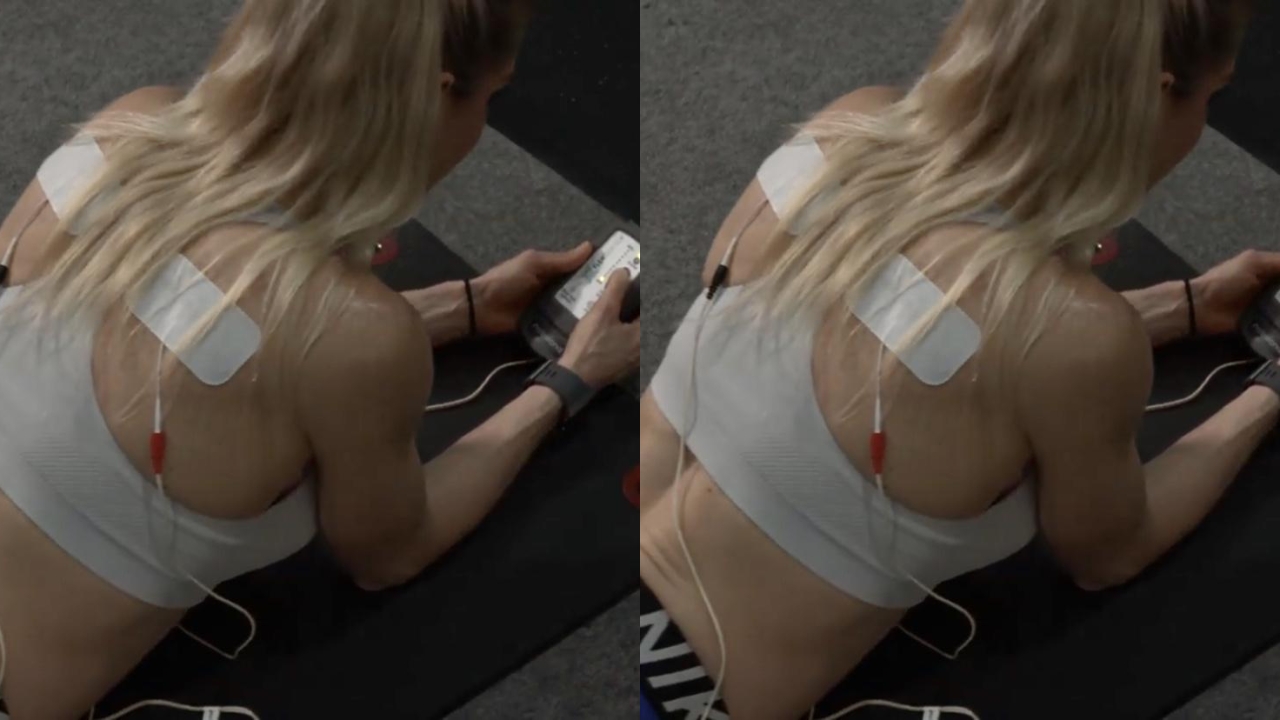
Prevention matters. ARPwave devices can be used alongside purposeful movement and strengthening to support clearer neurological signaling before compensation patterns become deeply ingrained. During exercise and training, improved brain-to-muscle communication helps reinforce coordinated patterns of muscle use. This reduces the likelihood that inefficient strategies dominate daily activities, including long hours at a desk.
Recovery and correction are equally important when compensation patterns are already established. Simply trying to sit up straighter or “hold better posture” may not be sufficient. These patterns are neurologically reinforced through repetition. The RxBlack and FlexDoctor devices are designed to assist by improving brain-to-muscle communication, supporting neuromuscular reeducation and helping the nervous system shift away from long-reinforced compensation patterns.
As signal quality improves, the nervous system becomes more capable of organizing muscle activity without relying on familiar workarounds.
Using ARPwave Devices While Sitting
An additional consideration is that ARPwave devices can, in certain applications, be used during prolonged sitting. This allows support to occur within the very position that has been most rehearsed.
Rather than focusing exclusively on changing external posture, the emphasis shifts to improving the information the brain receives about which muscles are active and which are underutilized. Enhanced feedback can help the nervous system recognize more appropriate activation patterns, even if the overall seated position is not perfectly optimized in that moment.
In this way, the goal is not simply to correct posture. It is to support the nervous system’s ability to send, receive, interpret, and respond to information about which muscles should be active, (and when) during prolonged sitting. Over time, this can help reduce the negative neuromuscular consequences associated with prolonged sedentary positioning.
The goal is not to eliminate sitting. It is to improve how the body adapts to it.
Maintaining Neuromuscular Efficiency in a Sedentary World
Modern life and desk jobs makes prolonged sitting difficult to avoid, but how your nervous system responds is not fixed. Inefficient patterns build gradually, yet with structured support, they can be reduced and more efficient movement patterns reinforced.
By understanding how repetition shapes the nervous system and exploring strategies that support brain-to-muscle communication, you can help maintain more balanced coordination. Even small improvements in muscle engagement during everyday positions can reduce strain, reinforce efficient activation, and support long-term mobility.
Tools like the RxBlack and the FlexDoctor can support brain-to-muscle communication, helping reinforce better coordination even during long periods of sitting. For individuals who spend much of their day seated, this type of support can make long-term neuromuscular change more achievable and amplify the benefits of working to improve seated positioning.
If you are working with a therapist, ask how supporting brain-to-muscle communication during prolonged sitting may benefit your specific needs.
Understanding how prolonged sitting shapes the nervous system is the first step. Exploring how neuromuscular support fits into your daily routine is the next. With a clearer view of brain-to-muscle communication and neuromuscular reeducation, you can take a proactive approach to reducing compensation and maintaining functional mobility in a seated world.
Medical References
[1] Mayo Clinic. What happens when you sit too much and what to do about it.
[2] Yale Medicine. Why Is Sitting So Bad for Us?
https://www.yalemedicine.org/news/sitting-health-risks
[3] University of California, Riverside. Too much sitting hurts even young, active people.
https://news.ucr.edu/articles/2024/12/04/too-much-sitting-hurts-even-young-active-people
Contact, ARPwave. Website, https://www.arpwave.com Phone, (952) 431 9708