
ARPwave Resources
Simple, Practical Tips to Make Strength Training with ARPwave More Effective (Without Overcomplicating It)

1.) Train Movements, Not Just Muscles
One of the biggest mistakes people make is treating ARP like a passive contraction tool—just sitting there and flexing. That limits its effectiveness.
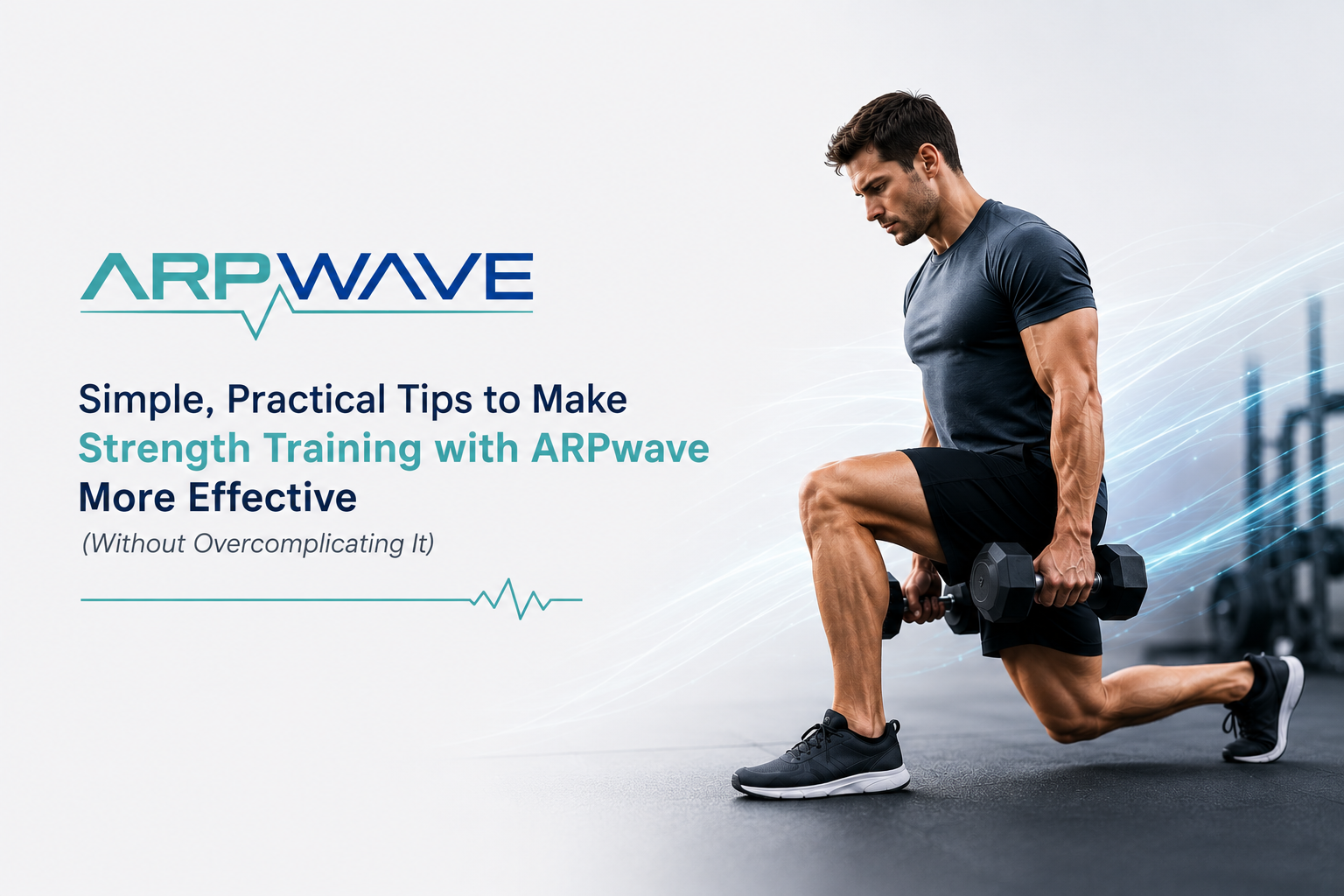
Instead, pair ARP with real, functional movements that your body actually uses in sport and daily life. This builds strength that transfers.
Great options include:
- Split squats
- Romanian deadlifts (RDLs)
- Step-ups
- Push-ups
- Rows
These compound patterns force your body to coordinate multiple muscle groups together, improving not just strength, but stability and control.
Key idea: If it looks like real movement, it will build real strength.
2.) Use High (But Controlled) Intensity
ARP works best when the contractions are strong—but there’s a limit.
You want:
- Deep, full muscle contractions
- Reps that feel challenging
- Clean, controlled execution
You don’t want:
- Shaking that throws off your form
- Compensations or awkward movement patterns
- Loss of control
If your mechanics break down, the intensity is too high.
Rule: The contraction should challenge you—not distort your movement.
3.) Slow Down the Tempo
Speed hides weakness. Slowing things down exposes it—and builds real strength.
Use a controlled tempo like:
- 3–4 seconds on the way down (eccentric)
- 1-second pause at the bottom
- Controlled lift back up (concentric)
When you combine slow tempo with ARP stimulation, you dramatically increase neural recruitment and muscle engagement.
Why it works: More time under tension + better control = stronger connections between brain and muscle.
4.) Keep Sets Short and Focused
This isn’t endurance training—it’s neural and strength work.
Stick to:
- 6–12 reps per set
- 3–5 sets
- 30–60 seconds rest
Long, drawn-out sets reduce quality and focus. Short sets keep intensity high and execution sharp.
Think quality over quantity every time.
5.) Focus on Weak Links First
ARP is especially powerful for activating muscles that tend to lag or don’t “fire” properly.
Common weak areas include:
- Glutes
- VMO (inner quad near the knee)
- Hamstrings
- Scapular stabilizers (upper back/shoulder control)
- Core
Targeting these areas can unlock rapid strength gains because you’re fixing the limiting factors in your movement chain.
Big payoff: When weak links improve, everything else gets stronger.
6.) Don’t Max Out Every Session
More intensity doesn’t always mean better results. In fact, constantly pushing max output can slow progress.
A better approach:
- 2–3 high-intensity sessions per week
- Alternate with lower-intensity or recovery-focused sessions
This allows your nervous system to recover and adapt, which is where real strength gains happen.
Remember: Progress comes from recovery, not just effort.
7.) Breathe During Contractions
A very common mistake is holding your breath during ARP contractions. This can overload your system and reduce performance.
Instead:
- Inhale slowly through your nose
- Exhale in a controlled way during the effort
Proper breathing helps regulate your nervous system and keeps your movements smoother and more controlled.
Bonus: You’ll last longer and perform better within each session.
8.) Track Output, Not Just Intensity
Turning the dial higher isn’t the only sign of progress—and often not the best one.
Pay attention to:
- Movement quality
- Stability and balance
- Added resistance or load
- Reps completed with good form
- Smoothness and consistency of contractions
True progress = doing the same work better, not just harder.
9.) Keep Sessions Short and Intentional
Long sessions often lead to fatigue, sloppy reps, and diminishing returns.
Aim for:
- 15–25 minutes of focused work
- Short, high-quality sessions beat long, unfocused ones every time.
Rule of thumb: If your focus drops, the session should end.