
ARPwave Resources
Pre-Season Arm Readiness: Prevent Shoulder & Elbow Injuries in Overhead Athletes


As athletes enter pre-season training, shoulder and elbow injuries often rise across overhead sports like baseball, softball, tennis, volleyball, and throwing events. These injuries are frequently caused not by the arm itself but by neuromuscular dysfunction, old injuries, or trauma elsewhere in the body. ARPwave therapy helps clinicians and athletes restore proper muscle firing, correct movement patterns, accelerate recovery, and improve performance. By addressing neuromuscular inhibition, reducing stiffness, and improving mobility, ARPwave supports faster muscle recovery and helps prevent recurring injuries.
Why Early-Season Injuries Are So Common
Early-season injuries are often caused by:
- Rapid increases in throwing or hitting volume
- Off-season deconditioning
- Muscle performance decline
- Reduced mobility and stiffness
- Poor neuromuscular coordination
- Compensation from old injuries or trauma
Athletes may feel strong, but improper muscle firing or inefficient movement patterns can cause the body to compensate. These compensations increase stress on the shoulder and elbow, leading to pain, stiffness, tingling, and reduced performance over time.
The Arm Is Often the Victim — Not the Cause
Common early-season complaints include:
- Rotator cuff irritation
- Medial elbow pain
- Posterior shoulder tightness
- Biceps tendon overload
These symptoms often arise from dysfunction in the kinetic chain. Limited lower body contribution, weak core stability, or scapular control deficits force the arm to compensate. Even after pain resolves, old injuries or trauma can leave persistent compensation patterns. Clinicians should address movement patterns, not just symptoms, while athletes benefit from restoring efficient movement for long-term performance.
Brain Controls Muscle Function (And What Happens When It Doesn’t)
Muscle function depends on communication between the brain and nervous system. Neuromuscular inhibition occurs when this connection is disrupted, causing muscles to:
- Fire late or inefficiently
- Fail to activate
- Compensate with surrounding muscles
Causes include:
- Trauma
- Old injuries
- Overuse and fatigue
- Poor movement patterns
Symptoms athletes may experience:
- Stiffness and reduced mobility
- Numbness or tingling
- Recurring injuries
- Performance decline
- Movement compensation
ARPwave therapy restores proper brain-to-muscle communication, improving muscle firing, correcting movement patterns, and supporting faster muscle recovery.
The Kinetic Chain and Movement Efficiency
Overhead athletes rely on force transfer throughout the body:
Feet → Hips → Core → Scapula → Arm
When one link is inhibited, stress shifts to the shoulder and elbow. Common contributors include:
- Limited thoracic rotation
- Scapular instability
- Posterior chain inhibition
- Poor hip extension
- Reduced glute activation
- Core control deficits
ARPwave helps clinicians identify inhibited muscles and restore correct movement patterns across the entire kinetic chain, reducing compensations and improving overall performance.
Key Advantages of ARPwave Therapy
ARPwave therapy offers unique benefits for both clinicians and athletes:
- Identifies neuromuscular inhibition
- Restores proper muscle firing
- Improves movement coordination
- Accelerates recovery and performance
- Reduces stiffness and improves mobility
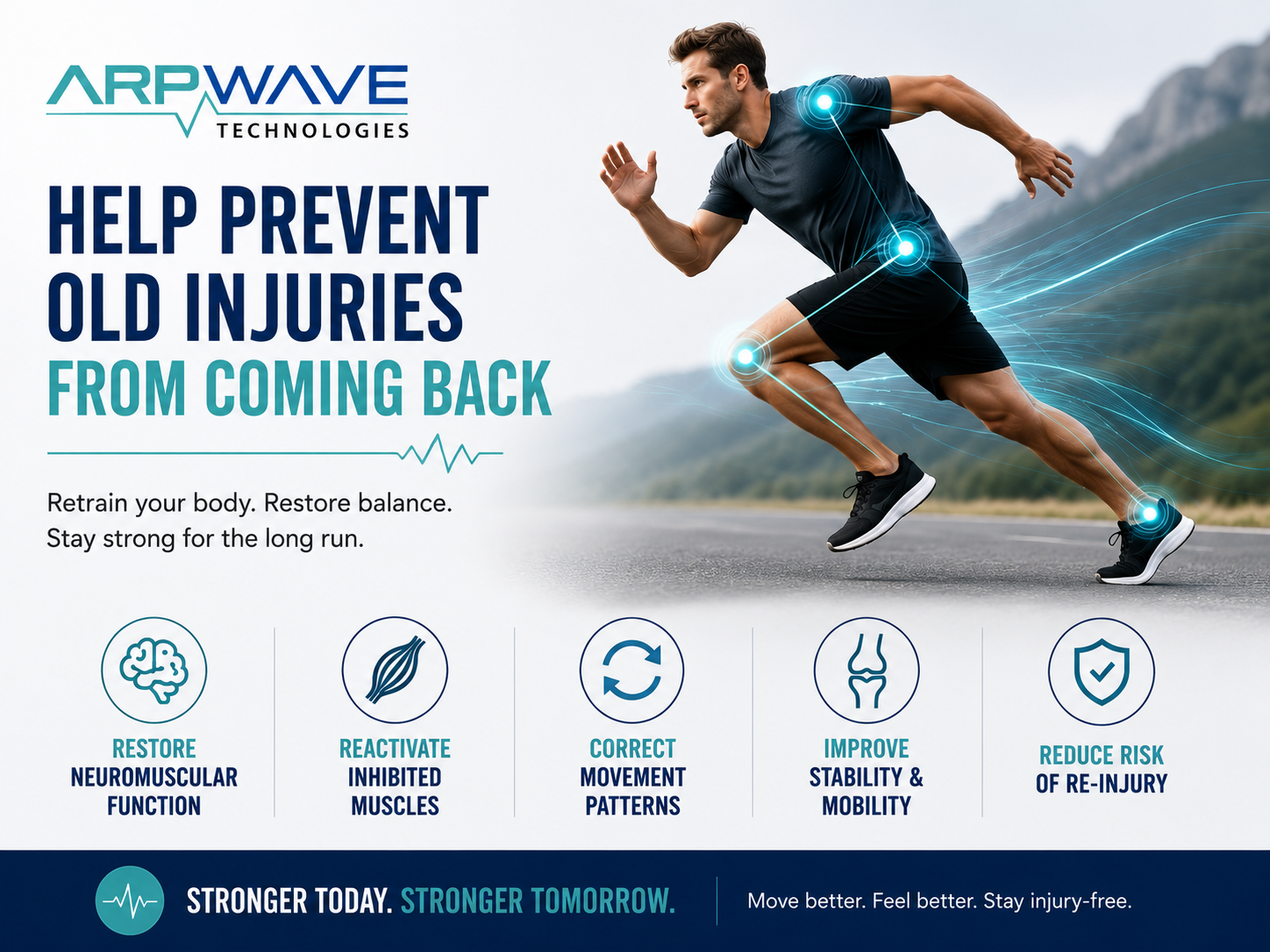
- Helps prevent old injuries from returning
- Supports faster muscle recovery
- Enhances durability and long-term performance
By addressing neuromuscular function, ARPwave reduces compensation patterns and restores efficient movement across the body.
Accelerated Recovery and Performance
As training volume increases, recovery is critical. ARPwave therapy supports:
- Faster muscle recovery
- Reduced stiffness and soreness
- Improved circulation and mobility
- Enhanced overall muscle performance
Athletes can tolerate higher workloads while minimizing injury risk. Clinicians can guide more effective rehabilitation protocols using ARPwave therapy.
Prevent Old Injuries From Coming Back
Old injuries often leave neuromuscular inhibition behind, even when pain resolves. This can cause:
- Recurring injuries
- Performance decline
- Limited mobility and stiffness
ARPwave therapy restores proper movement patterns, helping prevent re-injury, improve mobility, and maintain long-term performance.
A Working Recovery Plan
A comprehensive pre-season plan includes:
- Restoring proper muscle firing
- Improving mobility
- Reinforcing correct movement patterns
- Supporting accelerated recovery
ARPwave therapy integrates into each phase, assisting both athletes and clinicians throughout rehabilitation and pre-season preparation.
When It’s Time to Seek Neuromuscular Therapy
Athletes and patients may benefit from neuromuscular therapy if they experience:
- Recurring injuries or trauma
- Stiffness or reduced mobility
- Performance decline
- Slow muscle recovery
- Movement compensation patterns
- Numbness or tingling
Early intervention can prevent more serious injuries and optimize long-term athletic performance.
Why ARPwave Is Different
Traditional rehabilitation often focuses on isolated muscles or symptom relief. ARPwave targets neuromuscular function and movement efficiency, helping:
- Restore movement
- Improve muscle firing and performance
- Accelerate recovery
- Reduce compensation patterns
This makes ARPwave ideal for overhead athletes preparing for the season and clinicians addressing the root causes of injury.
Build Arm Durability Before Volume Increases
Restoring neuromuscular coordination and proper muscle firing before workloads increase reduces injury risk and improves performance. ARPwave gives clinicians and athletes the tools needed for pre-season readiness, injury prevention, and accelerated recovery.
Get started with ARPwave Therapy today!