
ARPwave Resources
Square Wave vs ARPwave: Waveform Differences, Body Response, and Device Comparison


Electrical stimulation devices often get discussed as if they all do essentially the same thing. They do not. Waveform design, pulse frequency, pulse duration, intensity, and electrode placement influence the stimulation delivered and the response it produces. The application matters just as much. A device used for passive stimulation serves a different purpose from a system that combines assessment, targeted stimulation, active movement, and progressive rehabilitation.
That is why comparing conventional square-wave electrotherapy with ARPwave requires looking at both the technology and the therapy. ARPwave combines a proprietary electrical signal with specific application guidelines, neuromuscular assessment, and targeted movement. Its value comes from how those elements work together to address the individual’s limitations and advance treatment as function improves.
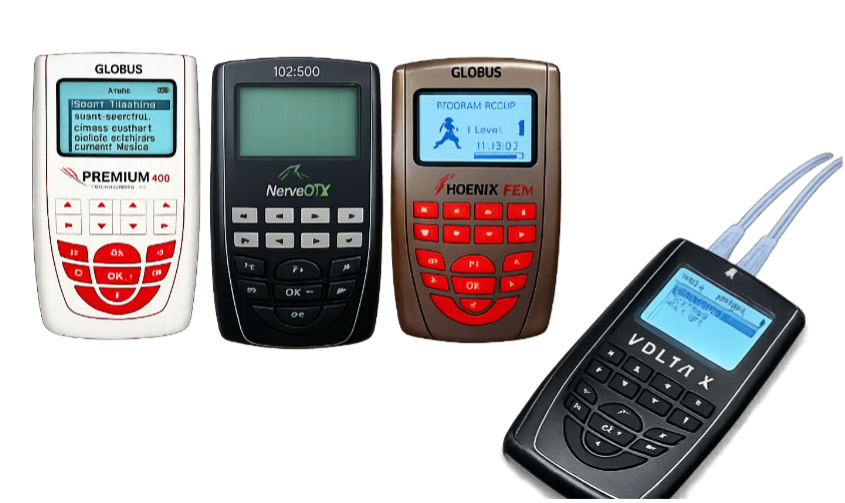
Common Square-wave Devices: Globus Premium 400 ($400), the NerveOTX DX500 ($4,995), the Globus Phoenix Wave ($4,100), and the VoltaX ($2,500)
What Is Square-Wave Electrotherapy?
Many conventional electrostimulation devices use rectangular or square-wave pulses. In simple terms, the signal rises rapidly to a selected amplitude, remains there for a defined pulse duration, and then falls rapidly. Depending on the settings and application, these pulses can stimulate sensory nerves, activate motor nerves, and produce muscle contractions. Rectangular pulses are widely used in TENS, EMS, and NMES applications.
Pulse shape and current direction describe different electrical characteristics. A square pulse can be delivered in one direction or as part of a biphasic signal that reverses direction. A waveform should therefore be evaluated by its complete electrical behavior, including its polarity, timing, amplitude, and interaction with the connected load.
The Globus Premium 400, Globus Phoenix Wave, and Globus Volta X belong together in the Globus device family, with capabilities evaluated according to each model’s documentation. These devices should not all be described as having only one square-wave program. Globus lists TENS, microcurrent, and iontophoresis capabilities for the Premium 400, while manufacturer-submitted records identify the Volta X and Phoenix Waveform Pro as programmable devices with several electrotherapy functions. Those capabilities do not establish equivalence with ARPwave’s signal architecture or application system. www.globuscorporation.com
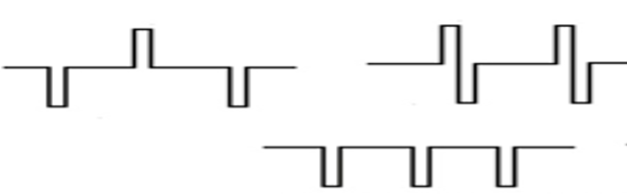
“Assorted Square-waves”
What Is the ARPwave Waveform?
ARPwave uses a proprietary, direct-current-based, layered electrical signal. The RxBlack operating manual describes a 10 kHz background signal expressed continuously over an adjustable main pulse, with main-pulse settings from 10 to 999 pulses per second. The manual specifies a main-pulse duration of 460 microseconds and a background-pulse duration of 25 microseconds, with both components displaying a characteristic charge-and-discharge spike shape. These specifications provide a more meaningful explanation of the technology than describing its waveform as simply “rounded.” For a deeper understanding of how frequency influences electrical stimulation, explore our article on why frequency matters.
In his Multi-Waveform Technology presentation, Dr. Ray Butts discusses ARPwave through three interacting elements: a low-level microcurrent component, a high-frequency background component, and a shaped main pulse. This layered architecture combines different electrical characteristics within the same application. The adjustable main pulse provides stimulation for active therapeutic work, while background components remain part of the signal.
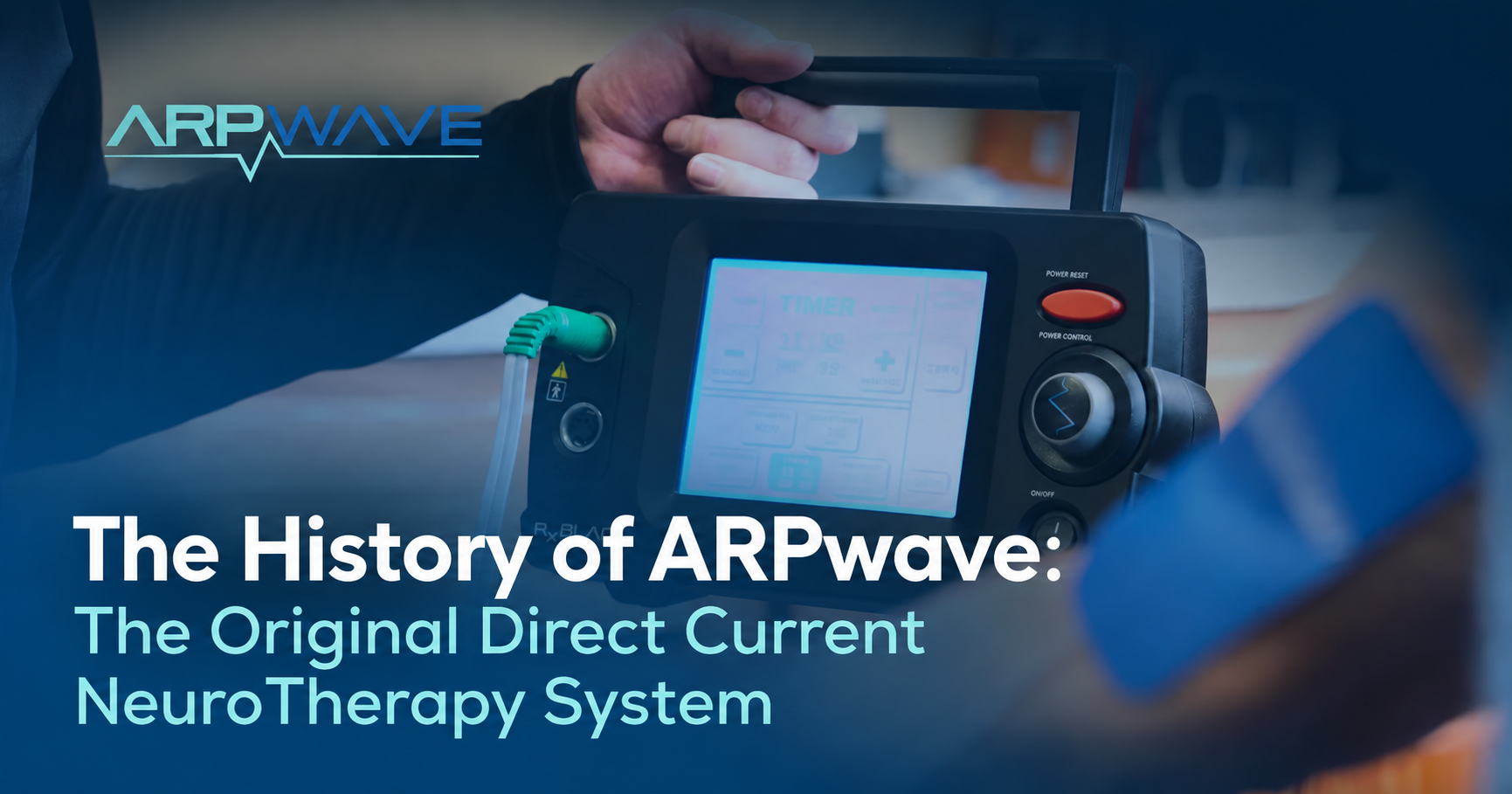
The RxBlack also provides primary-wave shutoff, reversible polarity, and battery or outlet operation. Used with the corresponding application guidelines, these controls allow the provider to adapt the stimulation to different treatment objectives. The product advantage lies in the combination of signal architecture, adjustable controls, and the guidance needed to apply them effectively. arpwave.com
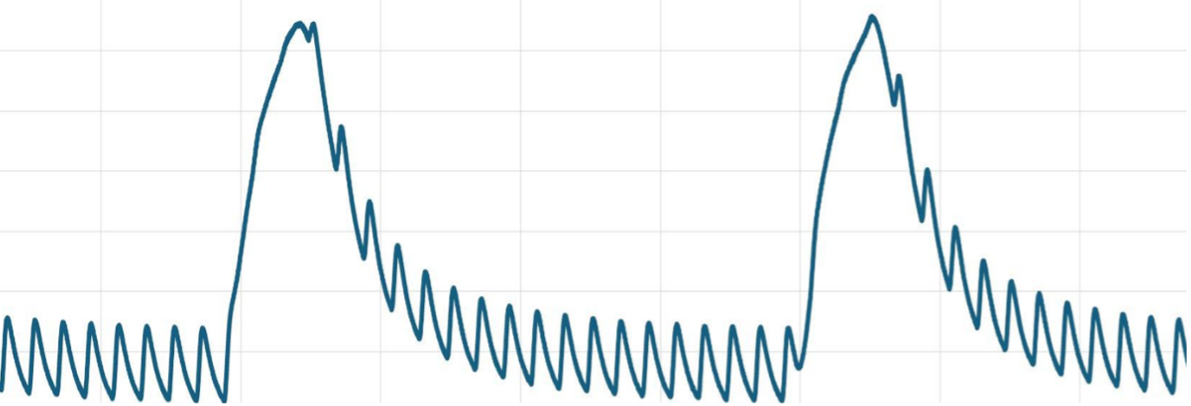 “ARPwave’s Proprietary Wave”
Why Waveform Design Matters
Waveform design influences which nerves are stimulated, how current is delivered, and whether a person can tolerate the stimulation needed for a particular task. Pulse duration, frequency, intensity, electrode size, and tissue impedance also affect that response. A waveform drawing alone cannot establish comfort, penetration depth, or clinical effectiveness. The meaningful question is whether the delivered stimulation supports the intended treatment at a useful, tolerable dose.
Ray Butts’ presentation connects electrical stimulation with several rehabilitation objectives, including muscle recruitment, sensory input, neuromuscular adaptation, and cellular bioelectricity. Stimulating motor nerves can help engage muscles when voluntary activation is limited, while sensory input can be paired with purposeful movement. Repeated stimulation and movement practice provide an opportunity to influence the pathways involved in producing force and coordinating activity. Microcurrent research also explores effects on cellular signaling, energy metabolism, and repair processes, although findings from laboratory and animal studies should not be presented as established patient outcomes. Understanding how electricity works in the body provides additional context for the relationship between electrical signals, the nervous system, and muscle activation.
Butts and colleagues’ 2025 narrative review supports investigating electrical modalities as complements to exercise. The authors explain that multiple waveforms may offer advantages because no single modality has demonstrated optimal effects across pain, inflammation, repair, performance, and recovery. They also call for further clinical trials. This provides a scientific rationale for a layered approach while keeping the distinction between promising mechanisms and demonstrated clinical outcomes clear. www.sciencedirect.com
For ARPwave, the practical opportunity is to connect that scientific rationale with an individualized therapy process. The signal provides the electrical input; the application determines how that input is incorporated into muscle activation, movement practice, and functional progression.
How the Body Responds to a Square Wave
A rectangular pulse can generate sensory stimulation, muscle activation, or both. At appropriate settings, conventional electrotherapy can support pain management, strengthening, and muscle re-education. The sensation depends on intensity, pulse duration, frequency, electrode contact, and individual sensitivity, so describing every square-wave device as harsh or uncomfortable oversimplifies the comparison.
Conventional NMES can also be paired with exercise, meaning active movement is not exclusive to ARPwave. The more useful comparison is how a particular device and its application process address the person’s limitations. Producing a contraction is one part of rehabilitation; selecting the appropriate muscles, incorporating relevant movement, managing the dose, and evaluating progress determine how that contraction contributes to function.
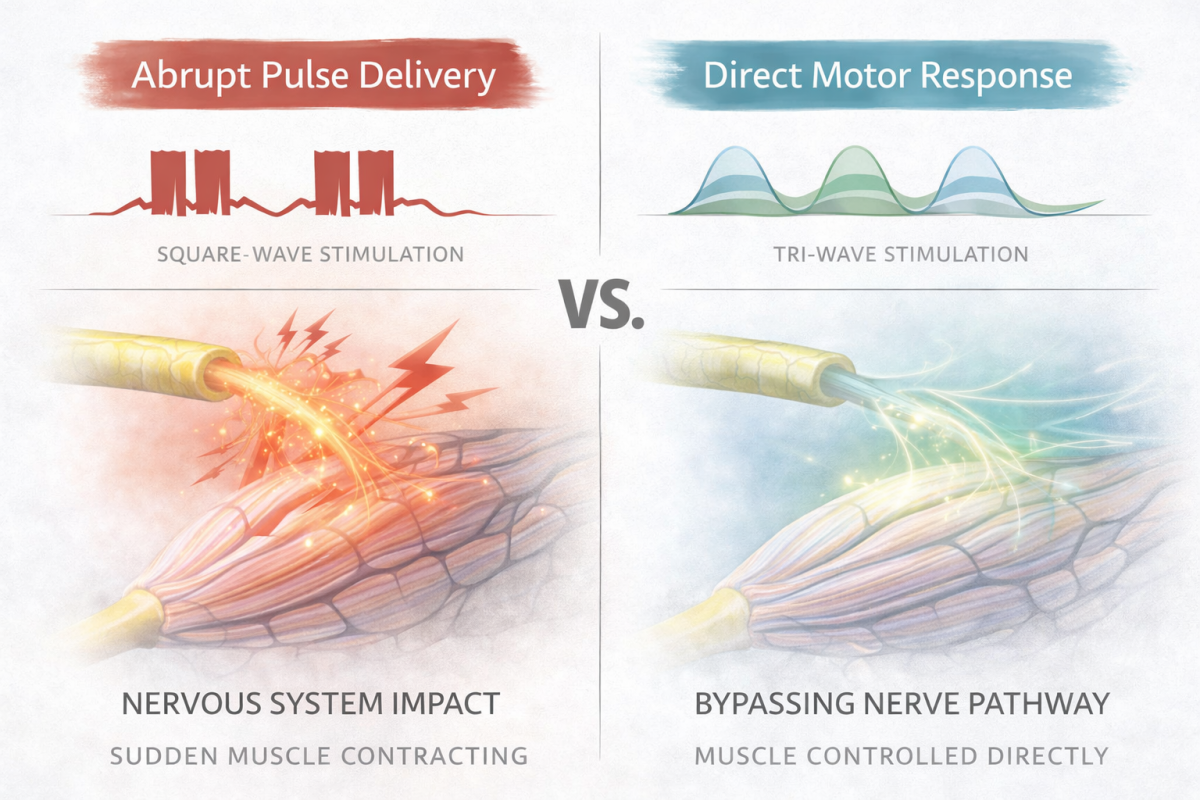
How the Body Responds to ARPwave
ARPwave combines electrical stimulation with application guidelines intended to address muscle function during movement. Depending on the individual, the clinical objective may include improving muscle participation, reducing movement restrictions, supporting local circulation, or practicing a task with greater control. Ray’s presentation provides a rationale for combining externally delivered sensory and motor input with voluntary effort, allowing recruitment and coordination to be addressed within the activity being trained.
The art of ARPwave is in how the provider applies the technology. ARPwave organizes this process around neuro efficiency, therapy, and strength and function. Treatment begins with an assessment of relevant muscle responses, movement limitations, symptoms, and functional goals. When indicated, neuro efficiency applications are followed by retesting to observe the response. Search and mapping procedures then help individualize treatment priorities and electrode placement before stimulation is paired with targeted movement.
“Neuro efficiency” is ARPwave’s term for how effectively the nervous system and muscles respond during testing and movement. Mapping helps guide an application; it does not independently establish a medical diagnosis. The provider uses these findings alongside the broader assessment to select movements, adjust stimulation, and determine how to progress the session. Changes in symptoms and movement are then considered together with strength, activity tolerance, and other relevant functional measures.
This process gives the technology a defined role within rehabilitation. Electrode placement, movement selection, coaching, intensity, and progression can change the treatment experience even when the same device is used. For patients, the benefit is an approach that can adapt as their abilities change. For providers, it offers a framework for making treatment decisions and assessing whether those decisions are producing useful progress.
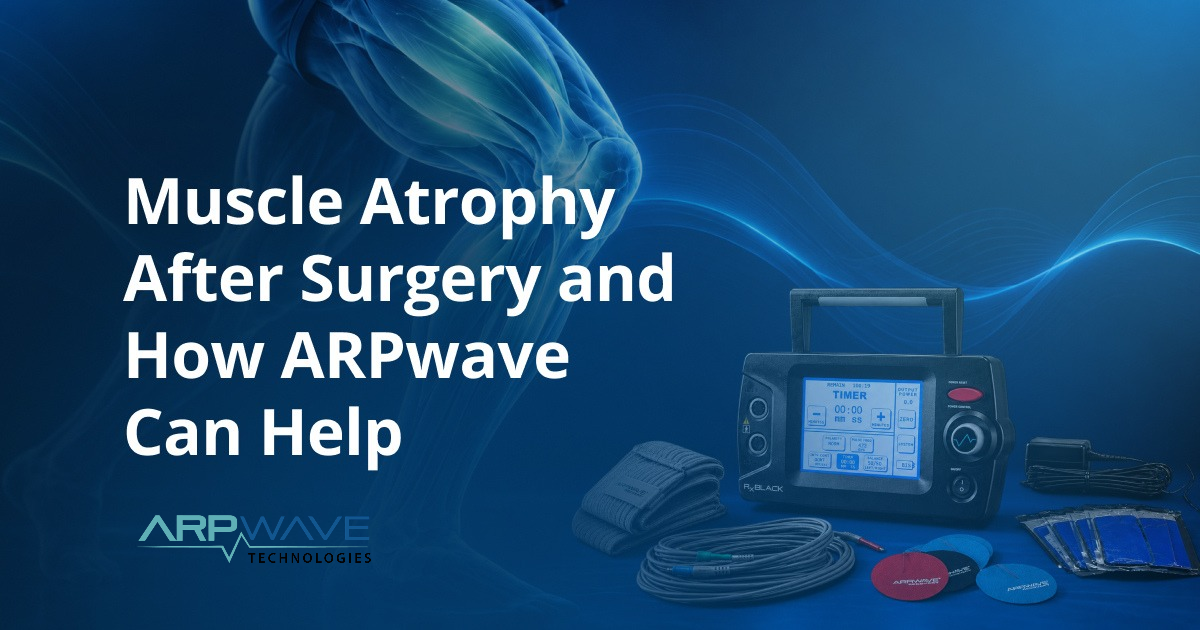
ARPwave-specific research provides preliminary support for this combined approach. A 2019 study examined ARP-assisted rehabilitation in 25 patients following ACL reconstruction and reported approximately three times greater gains in thigh circumference with the ARP protocol than with the comparison exercise protocol. This finding supports further consideration of ARP-assisted rehabilitation for postoperative muscle atrophy, but it does not establish three times faster healing, three times greater strength, or superiority over the competing devices discussed here. Thigh circumference was the principal outcome evaluated. pmc.ncbi.nlm.nih.gov
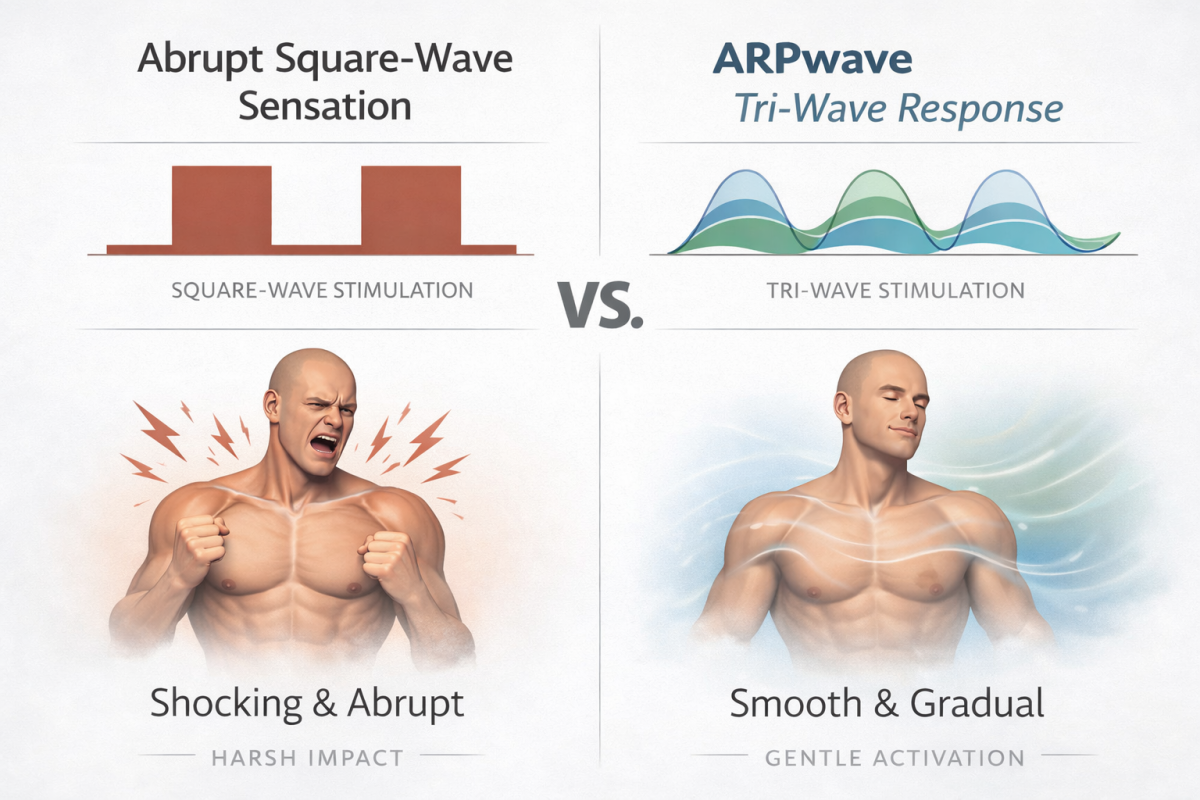
How This Applies to Other Devices in the Category
A useful comparison separates the Globus device family and the ARPwave system. Similar terminology does not establish identical output, equivalent applications, or comparable clinical outcomes. Each device should be evaluated according to its documented capabilities, intended use, application guidance, and supporting evidence.
The Globus Device Family
The Globus units belong in their own family, with model-specific differences in programs, waveform options, and intended uses. A program library can provide useful treatment options, but it does not by itself reproduce ARPwave’s device characteristics, application guidelines, assessment process, or provider education. The comparison should consider what the complete package provides and how those components support the person delivering or receiving treatment.
You Are Comparing Signals and Therapy Systems
ARPwave’s value comes from the relationship between its technology and its application. The RxBlack provides a layered electrical signal, a broad adjustable main-pulse range, and controls that support different application objectives. ARPwave NeuroTherapy connects those capabilities with assessment, mapping, targeted movement, retesting, and functional progression. To further understand what distinguishes ARPwave from conventional electrical stimulation, explore why ARPwave is not just another stim device.
For patients, that offers a guided approach to working on movement and recovery. For providers, it offers technology supported by a defined application process and education. The reason to choose ARPwave is the ability to bring the signal, the application, and the treatment progression together around the individual.
Talk with the ARPwave team about treatment, home use, or adding ARPwave to your practice.
Sources
Scientific and technical references include Dr. Ray Butts’ Multi-Waveform Technology educational presentation; Butts and colleagues’ 2025 narrative review; Wright and colleagues’ 2019 ACL rehabilitation study; the RxBlack operating manual and product information; Globus Premium 400 technical information; manufacturer-submitted records for the Volta X and Phoenix Waveform Pro; and current NerveOTX DX500 product information.
Research on individual electrical modalities helps explain potential mechanisms but does not automatically establish the same clinical effect for every ARPwave application.